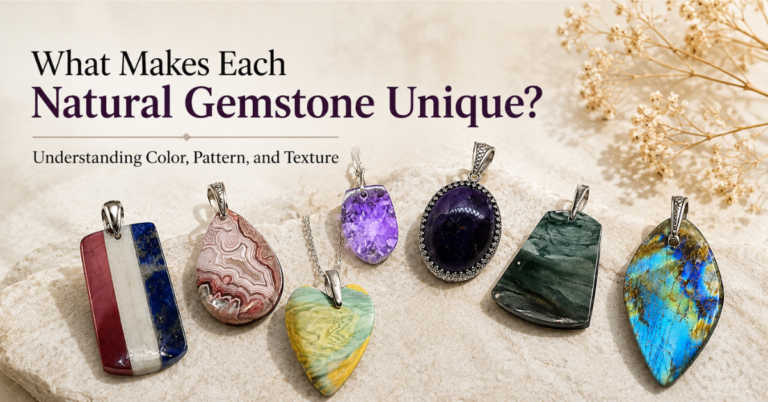
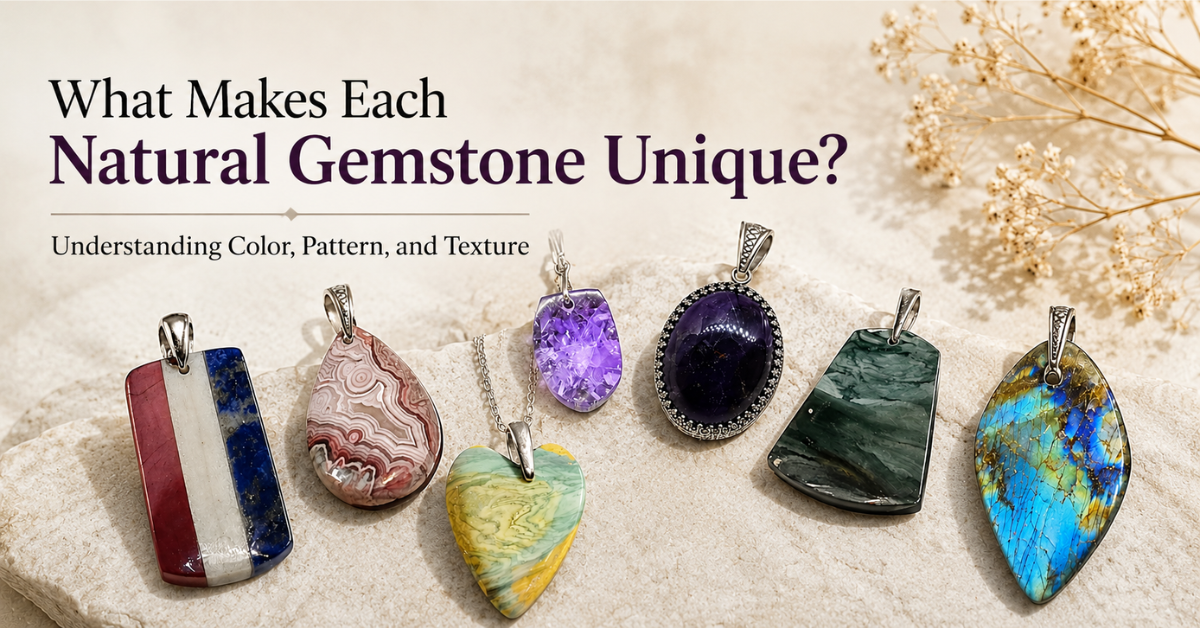
Pick up two natural gemstones that look similar, and you may notice something interesting. One has a deeper patch of color; another has a different pattern, and the surface of each catches the light in its own way. That happens because gemstones form under different natural conditions. The Smithsonian National Museum of Natural History explains that even small amounts of impurities can give quartz different colors, while its 2025 report on fancy-color diamonds notes that only about 1 in 10,000 diamonds is a fancy-color diamond.
So, what makes each natural gemstone unique? It comes down to a combination of color, pattern, texture, inclusions, and the way light interacts with the stone. These details give every piece its own character and make natural stones so interesting to work with.
Key Takeaways
- Natural gemstones develop different colors and patterns because of their unique formation conditions.
- Texture and surface characteristics can change how a stone looks and feels.
- Natural inclusions are not automatically flaws and can contribute to a gemstone’s individual appearance.
- Thoughtful cutting and polishing can bring out features that may not be obvious in a rough stone.
Why Does Every Natural Gemstone Look Different?
Natural gemstones aren’t produced from a single mold. Each one develops in a particular geological environment, where minerals, pressure, temperature, and other conditions influence its final appearance. The result can be subtle or surprisingly dramatic.
This is why natural gemstones are often described as one-of-a-kind. Even stones from the same variety can have noticeable differences.
Even gemstones from the same variety can have differences that become obvious once you look closely.
Color Can Vary Within the Same Stone
Color is usually the first thing that catches the eye. But a gemstone’s color isn’t always perfectly even. You may see lighter and darker areas, bands, flashes, or gradual shifts across the surface. The Smithsonian notes that trace impurities can change the color of minerals. In quartz, for example, different impurities can produce shades ranging from purple and yellow to pink and brown.
That variation is part of the appeal of gemstone jewelry. Instead of every piece looking identical, the natural material gives each one a slightly different appearance.
Patterns Develop Naturally
Patterns can be just as distinctive as color. Agate is a good example. The Smithsonian describes agate as a variety of quartz known for concentric color banding, with microscopic inclusions helping create some of those colors. Jasper can have flowing or scattered markings, while other stones may show lines, spots, layers, or patches. Some patterns are bold enough to notice immediately. Others only become visible when you turn the stone in your hand.
That’s one reason handcrafted jewelry can be so enjoyable to examine. The maker isn’t working with a perfectly uniform material. The stone already has something of its own to bring to the finished piece.
How Does Texture Affect a Gemstone’s Appearance?
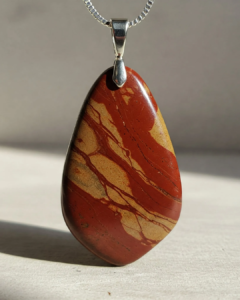
Texture isn’t only about whether a gemstone feels smooth. It can also describe the visual depth created by the stone’s natural structure, surface finish, and internal features. A polished stone may feel completely smooth while still showing layers, markings, or subtle changes underneath.
The Smithsonian’s quartz collection highlights the remarkable range of colors, patterns, and textures found in quartz and its varieties.
|
Characteristic |
What You May Notice | Why It Matters |
|
Color |
Light, dark, vivid, muted, or changing shades | Creates the first visual impression |
|
Pattern |
Lines, bands, patches, or swirls |
Gives the stone individuality |
|
Texture |
Smooth surface and visual depth | Adds another dimension to its appearance |
|
Inclusions |
Internal marks or natural features |
Can contribute to character |
|
Light effects |
Flash, shimmer, or changing color |
Makes the stone look different as it moves |
Are Inclusions Part of a Gemstone’s Character?
Look closely at a natural stone and you may find tiny lines, specks, clouds, or other internal features. These are commonly referred to as inclusions. They aren’t automatically a sign that something is wrong with the gemstone. Their meaning depends on the particular stone. Some inclusions can contribute to a gemstone’s appearance, while others may affect durability. The important thing is to understand what you’re looking at rather than assuming every natural mark is a defect.
In handcrafted gemstone jewelry, these details can actually become part of the design. A maker can position and cut the stone in a way that allows an interesting natural feature to remain visible.
Why Does Light Make Some Gemstones Look Different?
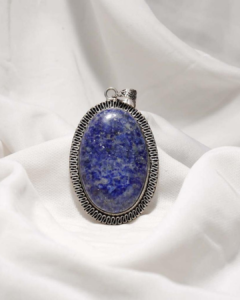
You may have noticed a stone looking fairly quiet indoors and then suddenly showing much more color when you step outside. That’s because light interacts with gemstones in different ways. Some stones display flashes, shimmer, or changing colors as they move. Labradorite is a familiar example, with its characteristic flashes becoming more noticeable from certain angles. Simply Stone Arts currently features labradorite pieces selected for their visible flash, showing how strongly light can influence the appearance of an individual stone.
This changing appearance is part of what makes gemstone jewelry so interesting. You may notice something different about the same piece depending on where you’re standing or how the light hits it.
How Does Cutting Bring Out a Stone’s Natural Features?
A rough gemstone doesn’t always show its best features right away. Cutting gives the maker an opportunity to work with the stone’s existing color, pattern, shape, and internal character. The goal isn’t always to make every stone symmetrical or identical. Sometimes a freeform shape makes more sense because it allows an unusual pattern to remain intact. Other times, an oval, teardrop, or cabochon shape may show the material more effectively.
This is where handcrafted jewelry can have a distinct appeal. The design can respond to the individual stone rather than forcing the material into a standard shape.
Why Natural Variation Is Worth Appreciating
It’s easy to compare two gemstones and wonder why they don’t look exactly the same. With natural material, that difference is actually expected.
One stone might have a darker section that gives the pattern more depth. Another might have a tiny inclusion that becomes interesting under bright light. A third could have a softer color but a pattern that immediately catches your attention.
Those differences are why natural gemstones can feel so individual and one-of-a-kind. You’re not choosing from identical copies. You’re choosing a piece of material with characteristics that developed naturally over time.
For someone who appreciates Gemstone Jewelry, that individuality can be more appealing than perfect uniformity.
How Craftsmanship Complements Natural Character
The gemstone comes first, but craftsmanship determines how much of that natural character remains visible in the finished piece. Cutting, shaping, polishing, and mounting all require decisions about what should be highlighted.
As a lapidary artist, Tom Monroe carefully considers each stone’s color, pattern, texture, inclusions, and shape when deciding how to cut and polish it. The goal is to preserve and highlight the natural character that makes each stone different. His work focuses on carefully shaping and polishing gemstones while allowing their natural patterns and textures to remain central to the finished design. That approach is especially suited to unique handcrafted jewelry, where the stone itself is part of what makes the final piece different.
Final Thoughts
What makes each natural gemstone unique is rarely one single feature. It’s the combination of color, pattern, texture, inclusions, and the way light interacts with the material. Those characteristics develop naturally, which means even stones that appear similar can have their own visual personality.
That individuality is part of what makes jewelry with stone so appealing. With careful cutting and craftsmanship, those natural details can remain at the heart of the finished piece.
At Simply Stone Arts, Tom Monroe works with each stone according to its individual qualities, creating pendants, earrings, and cabochons that allow the natural material to speak for itself.
For questions about available pieces or custom work, contact Simply Stone Arts at tom@simplystonearts.com or +1 908-672-8578. The studio is located in Flemington, New Jersey. Please contact the business directly to confirm current availability and working days before visiting or arranging an order.
Frequently Asked Questions
Why does every natural gemstone look different?
Natural stones form under different geological conditions. Variations in minerals, impurities, pressure, temperature, and growth can influence their color, pattern, texture, and internal features.
Are natural patterns a sign of good quality?
Not necessarily. Patterns are natural characteristics, and whether they are desirable depends on the gemstone and personal preference. A distinctive pattern can certainly make a stone more interesting.
Can two stones from the same gemstone variety look different?
Yes. Even stones of the same variety can have noticeable differences in color, markings, texture, and inclusions. That’s one of the reasons natural gemstones are so individual.
Why does a gemstone change appearance in different lighting?
Different types of light can bring out different colors and optical effects. Moving a gemstone can also change the angle at which light reaches and reflects from its surface.
Does cutting change a gemstone’s natural appearance?
Cutting can change how the existing characteristics are displayed. A thoughtful cut can emphasize a pattern, flash, color variation, or another feature that was less noticeable in the rough stone.
About the Author
Tom Monroe — Owner & Lapidary Artist
Every word on this blog comes from the same curiosity that guides our workbench. Simply Stone Arts is located in Readington, NJ. The owner and lapidary artist Tom Monroe carefully cuts and polishes natural gemstones, creating one-of-a-kind pendants and earrings inspired by the character of each stone. Through these blogs, we enjoy sharing what we’ve learned over the years, hoping to make the world of natural stone a little more familiar for anyone who appreciates handcrafted jewellery.