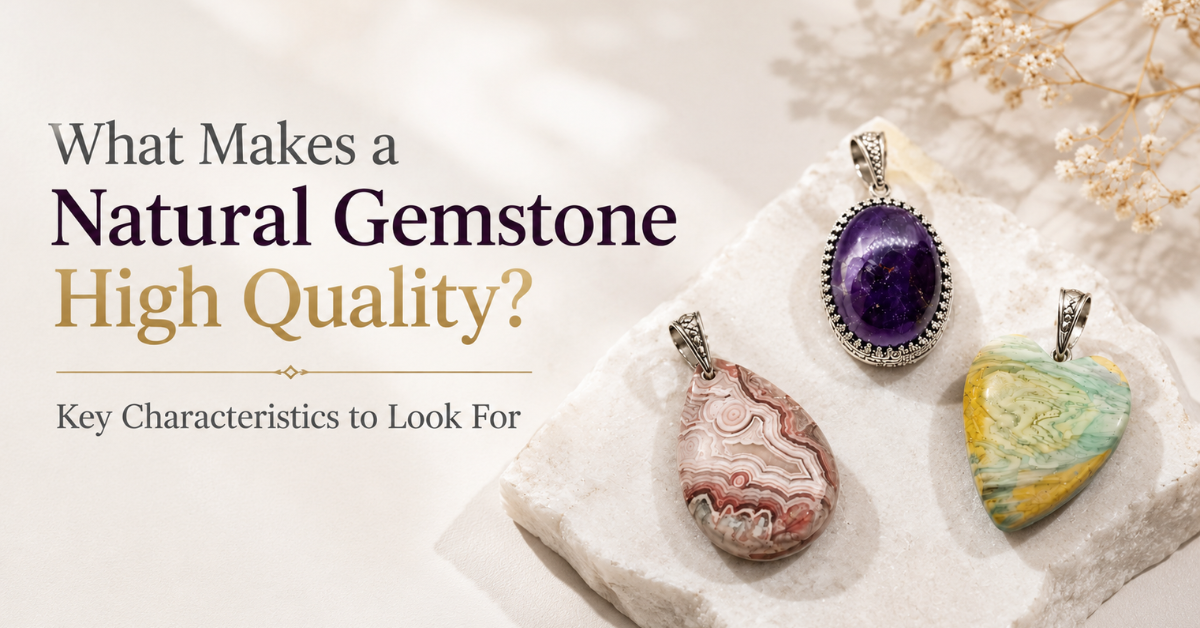
When you look at a natural gemstone, the first thing that usually catches your attention is its color. But color alone doesn’t tell you whether a stone is a good one. Its pattern, surface, clarity, cut, and overall condition all have something to say about its quality. In fact, the Gemological Institute of America (GIA) notes that colored gemstone quality and value can be influenced by factors including color, clarity, size, shape, and cutting quality.
So, what should you actually look for? This guide breaks down the details that can help you recognize a well-chosen natural gemstone, whether you’re looking at a loose stone or a finished piece of jewelry.
Key Takeaways
- Semi-precious stone jewelry can vary significantly depending on the quality and characteristics of the gemstone used.
- Color, pattern, clarity, and polish can tell you a great deal about a natural stone.
- A thoughtful cut should work with the stone rather than hide its natural character.
- Good craftsmanship brings the gemstone and the finished piece together without taking attention away from the stone itself.
What Should You Look for in a High-Quality Natural Gemstone?
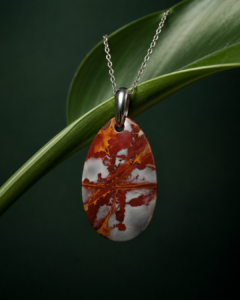
There isn’t one feature that automatically makes a gemstone high quality. Different stones have different characteristics, and what matters most for one may not matter quite as much for another. Looking at the whole stone gives you a much better idea of what you’re buying.
1. Start With the Color
Color is usually the first detail people notice, and for many colored gemstones, it plays an important role in quality. But the brightest or darkest stone isn’t automatically the best one.
Pay attention to whether the color looks appealing and suits the type of gemstone. Some stones are prized for rich, even color, while others are loved for flashes, bands, or natural variations. GIA also explains that the ideal color range differs from one gemstone to another.
2. Look Closely at the Pattern
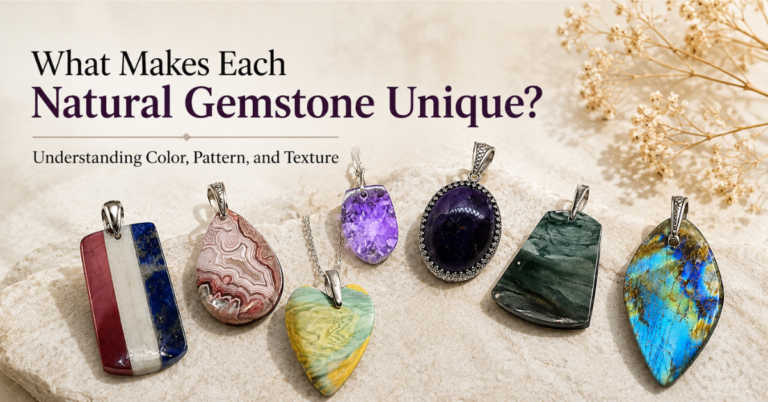
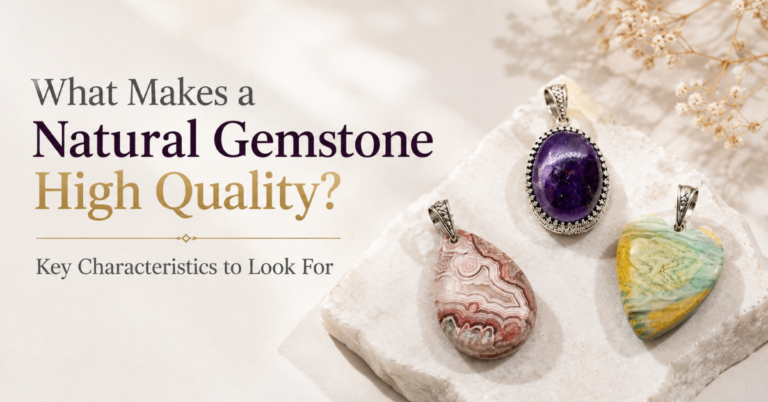
Natural gemstones can have patterns that make them immediately recognizable. Jasper may show earthy bands and markings, while agate can reveal layers and changes in tone. Labradorite is known for its flashes of color.
These features aren’t necessarily imperfections. In many cases, they’re part of what makes Gemstone Jewelry interesting. When examining a stone, take your time and look at it from different angles rather than judging it from a single glance.
People Also Search:
lapis lazuli cross
3. Don’t Automatically Dismiss Inclusions
The word “inclusion” can sound negative, but inclusions are not always a problem. Many natural gemstones contain internal features that formed as the stone developed. The important question is what those features look like and whether they affect the stone’s strength or appearance. GIA notes that some gemstone materials commonly contain inclusions, and in certain stones, particular inclusions can even contribute to their appearance.
For someone buying handcrafted gemstone jewelry, understanding this difference can make it easier to appreciate what is naturally present in the stone.
4. Pay Attention to the Polish
Run your eyes across the surface of the gemstone. A good polish should leave it smooth and bring out the color and pattern without making the stone look artificial.
Dull patches, visible scratches, rough areas, or an uneven finish can take away from the overall appearance. This matters particularly when the gemstone is the main feature of a pendant or another piece of jewelry with stone.
Key Characteristics at a Glance
|
Characteristic |
What to Look For | Why It Matters |
|
Color |
Attractive and appropriate for the stone |
Creates much of the visual appeal |
|
Pattern |
Natural markings, bands, or variations |
Gives the stone individuality |
|
Inclusions |
Features that don’t compromise the stone |
Can add natural character |
| Polish | Smooth and even surface |
Brings out color and pattern |
| Cut | Shape suited to the material |
Helps showcase the stone |
| Condition | No significant chips or damage |
Supports long-term use |
5. Consider the Quality of the Cut
Cutting is more than simply deciding whether a stone should be round, oval, or another shape. The way a gemstone is cut can affect how its color, light, and natural features appear. GIA’s research explains that cut quality includes factors such as proportions, symmetry, and polish. A thoughtful cut can help a gemstone show its best color and visual appeal.
For natural stones used in Semi-precious stone jewelry, the cutter also has to work with the material that is actually in front of them. That means making decisions based on the stone rather than forcing every piece into exactly the same shape.
6. Think About the Stone’s Condition
A natural gemstone doesn’t need to be completely free of every tiny mark to be worthwhile. What matters is whether there are visible chips, serious cracks, deep scratches, or other damage that could affect its appearance or use. Take a close look at the edges and surface, particularly if you’re buying a polished stone. If something looks noticeably damaged, ask about it before purchasing.
A good-quality handmade jewelry piece should also have a secure setting and clean finishing around the gemstone. The stone and the craftsmanship should work together.
Why Craftsmanship Can Change the Final Result
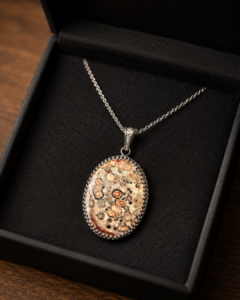
Two pieces can use similar gemstones and still look completely different once they’re finished. The difference often comes down to the person working with the stone. At Simply Stone Arts, Tom Monroe works with natural stones by studying their shape, color, markings, and overall character before deciding how each one should be used. That approach allows the stone to influence the finished design instead of treating every gemstone as identical.
This is one of the things that makes handcrafted gemstone jewelry appealing. The work doesn’t stop when the stone is selected. Cutting, polishing, shaping, and finishing all affect how the final piece looks and feels.
Want to see natural gemstones selected and finished with their individual character in mind? Explore Simply Stone Arts.
Does a Higher Price Always Mean Better Quality?
Not necessarily. Price can be influenced by rarity, size, demand, origin, craftsmanship, and other factors. A more expensive gemstone isn’t automatically the right choice for you.
GIA’s research also points out that the relative importance of quality factors can vary between different gemstone materials.
That’s worth remembering when looking at Semi-precious stone jewelry. Instead of focusing only on price, look at the stone itself. Does the color appeal to you? Do you like the pattern? Is the surface well finished? Does the piece feel carefully made?
Sometimes a stone with an unusual natural feature is the one you remember long after the more conventional pieces have been forgotten.
A Final Look Before You Buy
Before choosing a gemstone, give yourself a little time to look at it properly. Turn it in the light. Notice how the color changes. Look at the surface and edges. If you’re buying a finished piece, check how securely the stone sits and whether the metalwork looks clean. If you’re shopping online, look for photographs that show the stone from more than one angle. Clear descriptions and honest images are particularly important with natural stones because no two pieces of material will be exactly alike.
The goal isn’t to find a gemstone without character. Quite often, the opposite is true. You’re looking for a stone whose natural qualities make you want to keep looking at it.
Final Thoughts
A high-quality natural gemstone isn’t defined by perfection. Its appeal often comes from the combination of color, pattern, texture, polish, and the natural features that formed long before the stone became jewelry.
At Simply Stone Arts, those qualities are part of the process from the beginning. Tom Monroe takes the time to work with the stone in front of him, allowing its natural character to influence the finished piece. If you’re looking for jewelry with stone that feels individual rather than mass-produced, paying attention to these small details can help you understand what you’re seeing.
For questions about available pieces or custom work, contact Simply Stone Arts at tom@simplystonearts.com or 908-672-8578. The studio is based in Readington, New Jersey. Please contact the team to confirm current availability and working days before visiting or placing an order. Also, you can reach out to my Instagram handle: @tom.monroe.9862
Frequently Asked Questions
What makes a natural gemstone high quality?
Quality depends on the type of gemstone and several characteristics, including color, clarity, condition, cut, polish, and overall appearance. There isn’t one standard that applies equally to every natural stone.
Are inclusions bad in a natural gemstone?
Not always. Inclusions are natural features in many gemstones. What matters is whether they affect the stone’s durability, appearance, or value.
Does gemstone color determine quality?
Color can be an important factor, but it isn’t the only consideration. The ideal color also differs between gemstone types, so a stone should be judged according to its own characteristics.
Why is gemstone cutting important?
Cutting affects the way a gemstone displays its color, light, shape, and pattern. A thoughtful cut can bring out qualities that might otherwise be less noticeable.
Is handmade jewelry better than mass-produced jewelry?
The two are made differently. Handmade jewelry often allows the maker to respond to the individual shape, pattern, and character of a particular gemstone rather than producing every piece from an identical template.
Note: Gemstone characteristics and care requirements can vary by stone. The information provided is for general guidance and is not a substitute for professional gemstone or jewelry evaluation.
About the Author
Simply Stone Arts Team
Every word on this blog comes from the same curiosity that guides our workbench. Simply Stone Arts is located in Readington, NJ. The owner and lapidary artist Tom Monroe carefully cuts and polishes natural gemstones, creating one-of-a-kind pendants and earrings inspired by the character of each stone. Through these blogs, we enjoy sharing what we’ve learned over the years, hoping to make the world of natural stone a little more familiar for anyone who appreciates handcrafted jewellery.