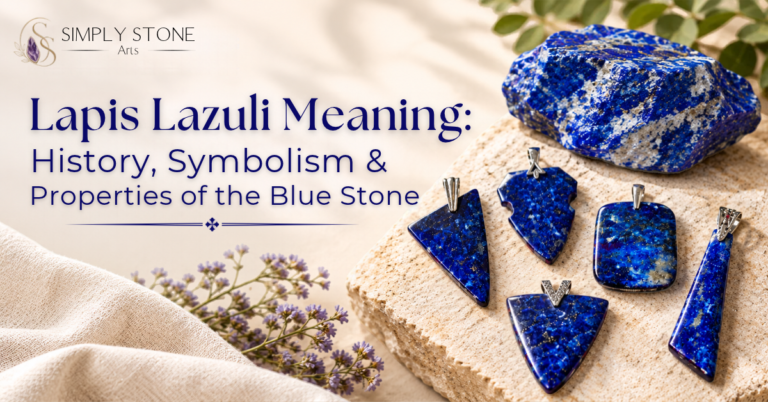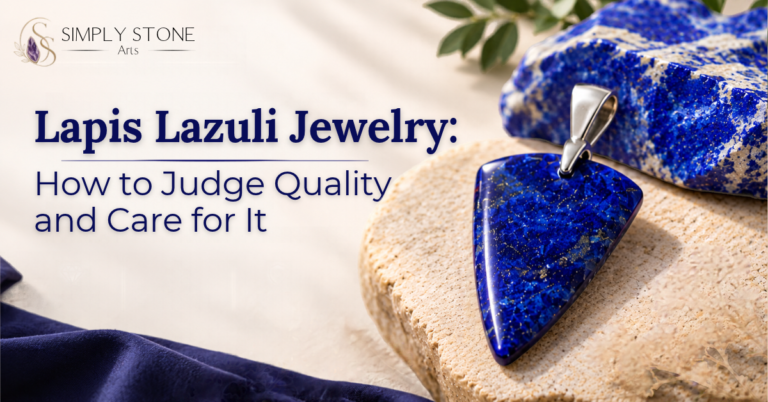
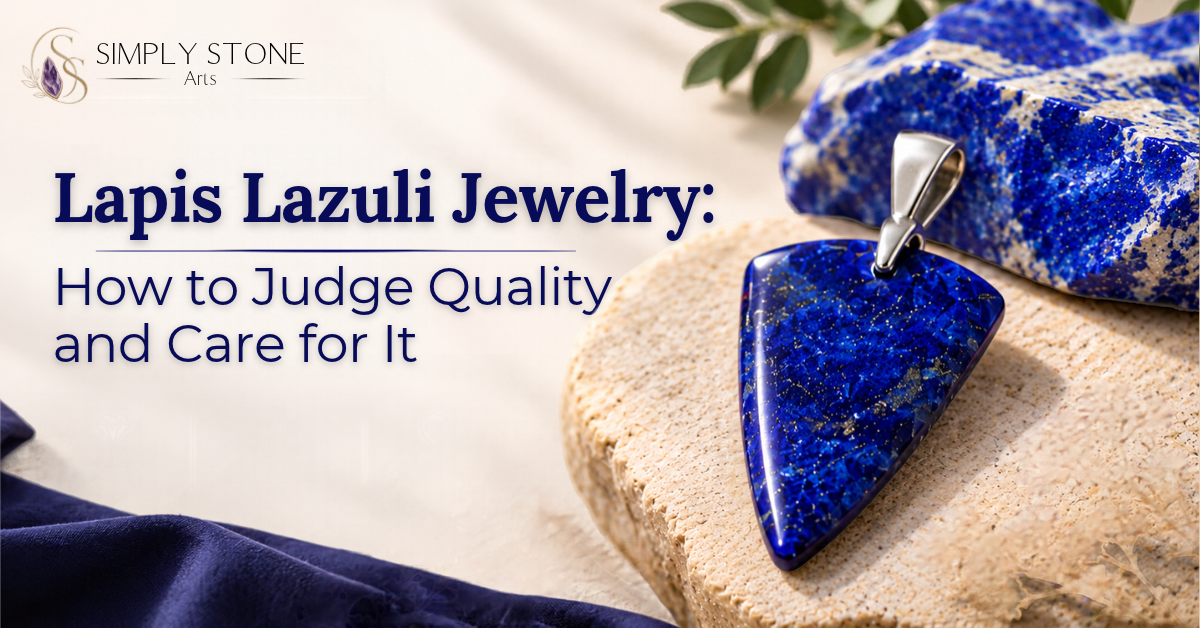
Lapis lazuli jewelry is admired for its rich blue color, natural golden flecks, and distinctive mineral patterns that make every stone visually unique. From elegant pendants to polished cabochons and handcrafted earrings, this gemstone offers a timeless look that suits different personal styles. However, choosing a quality piece involves more than finding an appealing shade of blue. The stone’s natural markings, surface finish, cutting, and setting all influence its overall appearance and durability. Understanding these details can help you assess lapis lazuli quality and select a piece that matches your preferences. Since lapis lazuli is relatively soft compared with many other gemstones, proper care is equally important. Knowing how to clean, handle, and store your jewelry can help preserve its polished surface and distinctive character for years to come.
What Determines the Quality of Lapis Lazuli Jewelry?
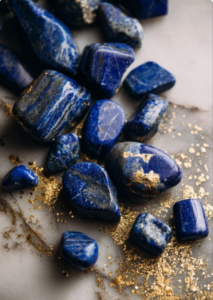
The quality of lapis lazuli jewelry depends on the stone itself and how it has been shaped and incorporated into the finished piece. Natural variation is expected, so the goal is not to find a perfectly identical-looking stone but to choose one with an appearance and finish you appreciate.
Color and Natural Patterns
Lapis lazuli is known for its intense blue color, which can range from deep royal blue to lighter or slightly violet-blue shades. Its appearance depends partly on the mineral composition and the distribution of other materials within the rock.
- Lazurite gives the stone its characteristic blue color.
- Pyrite creates small golden or metallic-looking flecks.
- Calcite can appear as white streaks or patches.
Some people prefer a relatively uniform blue surface, while others enjoy stones with noticeable golden flecks. Neither preference automatically determines quality. When assessing lapis lazuli quality, consider whether the color, markings, and overall appearance suit the design you want.
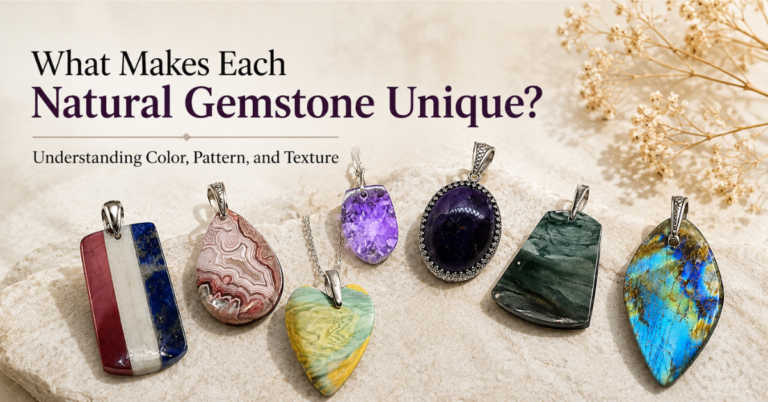
For more background, read our related guide to what makes each natural gemstone unique→
Surface Finish and Cutting
Cutting and polishing influence how lapis lazuli looks in finished jewelry. A well-polished surface can bring out the stone’s color and make its natural markings easier to appreciate. Rough edges, uneven finishing, or visible damage may affect the overall appearance of a piece.
A polished cabochon is a common choice for lapis lazuli jewelry. It has a smooth, rounded or domed surface rather than the multiple flat facets found on many cut gemstones. This shape allows the stone’s color and patterns to remain the focus.
Hand-cut stones may also have slight differences in shape and proportions. These variations are not necessarily flaws, but the finished piece should look intentional and feel suitable for its design.
Signs of Good Craftsmanship
Beyond the stone’s appearance, examine how the jewelry has been assembled. A well-finished piece should feel comfortable to wear, with smooth edges and a secure setting that holds the stone firmly in place.
Pay attention to the stone’s alignment, the finish around its edges, and whether the clasp or pendant attachment feels sturdy. With earrings and necklaces, check that the weight and proportions are appropriate for regular use.
Good craftsmanship brings the materials together without distracting from the stone itself. It is particularly important when a design features a natural stone with distinctive markings.
How to Evaluate a Lapis Lazuli Pendant or Cabochon
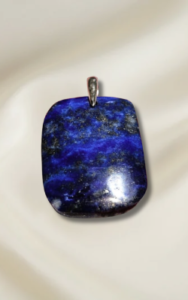
Different jewelry designs highlight lapis lazuli in different ways. A pendant places the stone at the center of a necklace, while a cabochon may be used in rings, earrings, or other settings. Evaluating the stone alongside its design helps you judge whether the finished piece meets your expectations.
What to Look for in a Lapis Lazuli Pendant
When choosing a lapis lazuli pendant, start with the stone’s color, shape, and finish. Consider whether you want a bold, larger pendant or a smaller design that works with everyday outfits.
The chain and attachment also matter. The pendant should hang comfortably, and its loop or bail should be securely attached. Check that the stone does not shift within its setting and that the overall design feels balanced.
Think about how often you plan to wear it. A simple pendant may work well with casual clothing, while a more elaborate design may suit special occasions.
Choosing a Lapis Lazuli Cabochon
A lapis lazuli cabochon is shaped and polished to create a smooth surface that emphasizes the stone’s color and natural pattern. Because cabochons are often used in settings that expose much of the stone’s face, surface quality and edge finishing are especially important.
Look for a smooth polish without obvious scratches or chips. Check the edges for a clean finish and consider how the markings sit within the shape. A stone with noticeable calcite or pyrite can still be attractive if its pattern works well with the design.
Why the Setting and Metal Matter
The setting influences both the appearance and protection of lapis lazuli jewelry. A bezel setting surrounds the stone’s edge with a rim of metal, which can help shield its sides from some knocks and impacts. It does not make the stone scratch-proof, so careful handling remains necessary.
Common metal choices include sterling silver and gold-filled components. Sterling silver offers a cool-toned finish that contrasts well with deep blue, while gold-filled details provide a warmer look. The best option depends on personal preference, the overall design, and the quality of the setting.
Explore custom gemstone jewelry options if you are looking for a design built around a particular stone or style→
Handmade Lapis Jewelry vs. Mass-Produced Designs
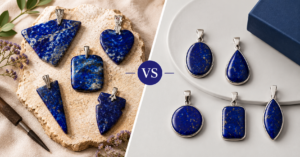
The way a piece is made can influence its design, finish, and individuality. Handmade and mass-produced jewelry can both be well made, but understanding their differences helps you decide which style and craftsmanship best match your preferences.
The Value of Handcrafted Details
Handmade lapis jewelry may involve selecting individual stones, shaping them by hand, and carefully finishing each setting. These steps allow the maker to adapt a design to the stone’s natural color and markings rather than treating every piece as identical.
Hand-cut stones may also have slight variations in their shape and proportions. These details can give the finished jewelry a distinctive appearance, especially when the maker chooses a setting that complements the stone.
However, handmade does not automatically mean higher quality. Look at the actual finish, stone security, materials, and overall construction when comparing pieces.
Understanding One-of-a-Kind Variations
Natural lapis lazuli varies in color, mineral distribution, and pattern. One stone may have a mostly blue surface, while another may contain prominent pyrite flecks or white calcite veins.
These differences make natural gemstone jewelry appealing to people who prefer individual character over uniformity. A one-of-a-kind piece can reflect the particular stone selected and the way it has been cut and polished.
When shopping, review the actual stone whenever possible, especially if you are ordering online. Product photographs can help you assess its appearance, but confirm whether the pictured stone is the exact one you will receive.
How to Care for Lapis Lazuli Jewelry
Lapis lazuli is a relatively soft stone, so it needs more careful handling than harder gemstones. Good care does not require complicated products or routines. Gentle cleaning, protection from chemicals, and suitable storage can help preserve its polished surface.
Clean the Stone Gently
The safest general approach is to clean lapis lazuli with a soft, dry cloth. If necessary, use a slightly damp cloth and dry the piece promptly. Avoid abrasive brushes, strong cleaning agents, ultrasonic cleaners, and prolonged soaking.
If the jewelry includes sterling silver, gold-filled components, adhesives, or other materials, consider their individual care requirements as well. A cleaning method that suits the metal may not be appropriate for the stone.
Explore Simply Stone Arts’ handcrafted gemstone jewelry to discover natural stones with distinctive colors and patterns→
Avoid Chemicals and Sudden Impacts
Lapis lazuli can be damaged by unsuitable cleaning products and rough handling. To protect its surface and setting, follow these precautions:
- Avoid chemicals: Keep the stone away from household cleaners and minimize direct contact with perfumes, cosmetics, and hairsprays.
- Prevent impacts: Remove jewelry before exercise, gardening, or activities that could cause knocks or chips.
- Handle it carefully: Avoid dropping the piece or placing heavy objects on it.
- Check the setting: Look for loose stones, damaged prongs, or other signs that the jewelry needs professional attention.
These habits are particularly important for rings and other pieces that may experience more frequent contact with hard surfaces.
Store Lapis Lazuli Properly
Appropriate storage helps reduce scratches and protects the jewelry when it is not being worn. Keep lapis lazuli in a soft pouch or a separate compartment in a lined jewelry box.
Avoid storing it directly against harder gemstones, which may scratch its surface. Keeping necklaces and earrings separated can also prevent chains from tangling or metal components from rubbing against the stone.
Before putting a piece away, make sure it is dry and check that its clasp or setting remains secure.
Common Mistakes to Avoid When Buying or Caring for Lapis Lazuli
Even a beautiful gemstone can lose its appeal if it is poorly finished or handled incorrectly. Keeping a few common mistakes in mind can help you make a better purchase and maintain your jewelry.
- Choosing a stone based only on its blue color without examining the finish and setting.
- Assuming natural pyrite flecks or calcite markings automatically indicate poor quality.
- Using harsh cleaners or soaking lapis lazuli for extended periods.
- Storing the stone alongside harder gemstones without protection.
- Wearing delicate jewelry during activities that may expose it to impacts or scratches.
Remember that quality depends on the stone, the craftsmanship, and the suitability of the design. Natural markings are part of lapis lazuli’s character, while avoidable damage and poor finishing are separate concerns.
Final Thoughts: Choosing Lapis Lazuli Jewelry That Lasts
Choosing good lapis lazuli jewelry means looking beyond its striking blue color. Natural patterns, a smooth finish, careful cutting, suitable metals, and a secure setting all contribute to the finished piece. Because lapis lazuli is relatively soft, gentle cleaning and thoughtful storage are equally important for preserving its appearance.
At Simply Stone Arts, natural stones and lapidary craftsmanship come together to highlight the individual character of each gemstone. Whether you are interested in a pendant, a polished cabochon, or a custom design, consider the stone’s natural features and how you plan to wear it.
For inquiries about custom designs or available pieces, contact Simply Stone Arts at +1 908-672-8578 or visit the custom order page.
Reach out to the Simply Stone Arts team to confirm current availability and working days→
Frequently Asked Questions
How can you tell if lapis lazuli jewelry is good quality?
Look for a stone with a color and natural pattern you like, a smooth finish, and no obvious chips or damaging cracks. Also examine the setting, metal finish, and overall craftsmanship.
Is lapis lazuli suitable for everyday wear?
Yes, but it requires care. Its relatively low hardness makes it more vulnerable to scratches and chips than harder gemstones, so remove it during strenuous activities and avoid rough handling.
Is a bezel setting a good choice for lapis lazuli?
A bezel setting can help protect the stone’s edges by surrounding them with metal. However, it cannot prevent every scratch or impact, so careful handling is still important.
Can lapis lazuli jewelry get wet?
Brief contact with water can generally be managed by drying the piece promptly, but prolonged soaking is best avoided. Follow the care requirements of the stone, metal, and any other materials used in the jewelry.
How should I store lapis lazuli jewelry?
Store it in a soft pouch or a separate lined compartment, away from harder gemstones and abrasive objects. Keep the piece dry and check its setting periodically.
Note: Lapis lazuli naturally varies in color, pattern, and durability. Care needs may also differ depending on the jewelry setting and materials used, so always follow the maker’s specific care recommendations.