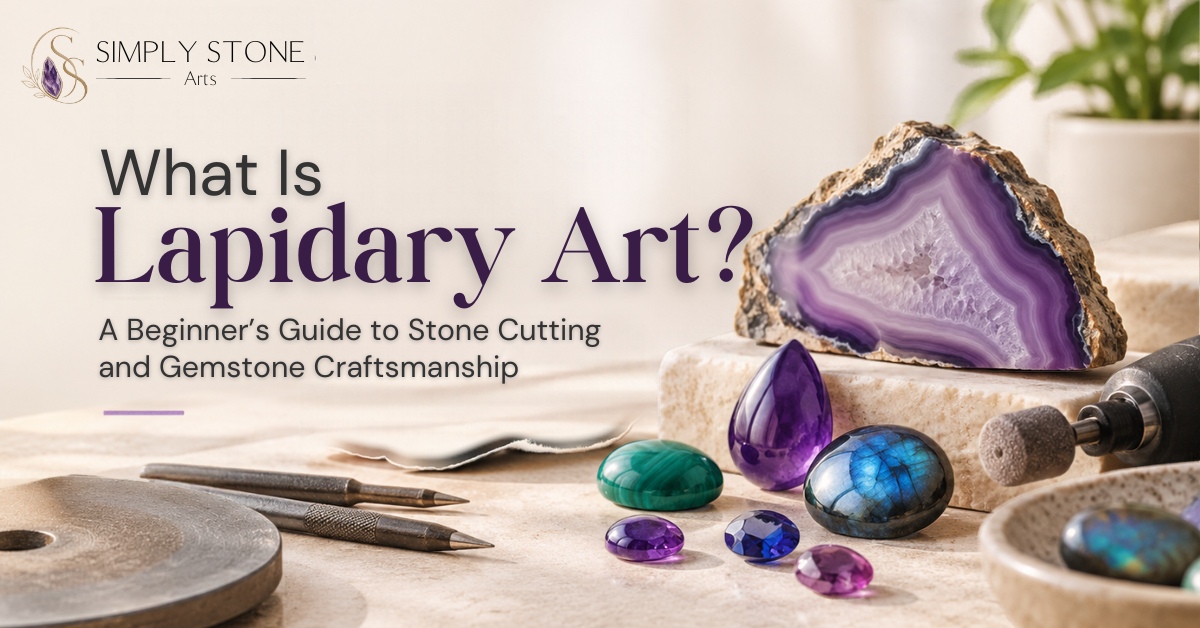
When people search for lapidary services near me, they are usually looking for something more than a quick transaction. They want someone who understands stone the way a woodworker understands grain, someone who can look at a rough rock and see the pattern waiting inside it before a single cut is made. That is exactly what lapidary art is, and that is exactly what this guide is about. Over the next few minutes, we will walk through what lapidary art actually means, how the craft developed, what the process looks like from rough stone to finished piece, and how to think about choosing the right person for the job for your own project.
Here is a number worth sitting with. The global gemstones market is expected to reach approximately USD 106.8 billion in 2026. Growth like that tells us something simple: people want jewelry that feels personal and connected to the earth it came from, not something stamped out by a machine in a factory somewhere. That shift is exactly why lapidary art, an old craft, is finding new relevance today.
Key Takeaways
- Lapidary art is the practice of cutting, shaping, and polishing gemstones by hand, most often into smooth, dome-shaped cabochons.
- The craft dates back thousands of years and remains popular today because it produces one-of-a-kind, handcrafted gemstone jewelry instead of mass-produced pieces.
- The journey from rough stone to finished piece has several careful stages. It includes cutting, shaping, grinding, and polishing, each requiring patience and skill.
- If you are still searching for lapidary services on Google, look for an artist who cuts their own stone and is happy to talk you through their process before you commit to a custom piece.
So, What Exactly Is Lapidary Art?
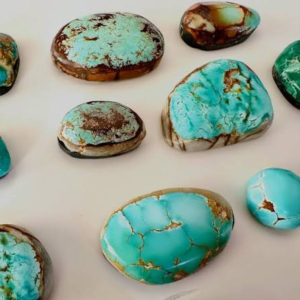
If you’ve never heard the term before, lapidary art is simply the craft of working with stone. To most people, it looks like an ordinary rock. An experienced lapidary artist sees something more. The real skill is knowing where to make that first cut because what’s on the outside rarely tells the whole story. With time, careful shaping, and plenty of polishing, the stone slowly begins to show the colors and patterns that were there all along.
This is different from mass-manufactured jewelry, where a machine cuts identical stones by the thousands. A lapidary artist works on one stone at a time. Every piece of rough is different, so every finished stone turns out a little different too. That is part of the appeal of handcrafted gemstone jewelry. No two pieces are ever exactly alike, and the person cutting the stone gets to decide how to bring out its best features.
Most lapidary work centers on the cabochon, a stone that is shaped into a smooth dome on top with a flat back, rather than faceted like a diamond. Cabochons let opaque and patterned stones like jasper, agate, and lapis lazuli show off their natural markings instead of relying on sparkle. If you have ever admired a pendant with swirling colors that look almost like a tiny painting, there is a good chance you were looking at a well-cut cabochon. This is one reason gemstones are cut this way and tend to stand out in a crowd.
People also read: Artisan Jewelry in New Jersey: Why Simply Stone Arts Is the Premier Choice for Unique Handcrafted Pieces
A Short History of a Very Old Craft
People have been cutting and polishing stones for thousands of years. Ancient Egyptians shaped turquoise and lapis lazuli into cabochons for amulets and jewelry, believing the smoother and more natural the stone stayed, the stronger its meaning. Medieval Europeans used the cabochon cut on rubies and emeralds so their color could be seen from across a room. Even as faceted cuts became more fashionable for diamonds and other transparent stones, the cabochon never really went away. It simply moved into the hands of artisans who valued natural pattern over pure sparkle, which is where it remains today.
From Rough Stone to Finished Piece
Turning a rough stone into a wearable piece takes patience and a steady hand. Here is a simplified look at the general stages involved.
| Stage | Process |
| Selecting the rough | The artist studies the raw stone to find where the best color and pattern sit inside it. |
| Cutting | The rough is sliced into slabs using a diamond saw to expose the interior. |
| Shaping | The slab is ground down into the desired outline, often freeform or a simple dome. |
| Grinding and sanding | Progressively finer grits smooth out scratches and refine the curve of the dome. |
| Polishing | A final buffing stage brings out shine and depth in the stone’s natural color. |
| Setting | The finished cabochon is mounted into a pendant, earring, or other jewelry setting. |
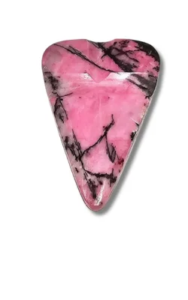
No two stones behave exactly the same way during this process. A soft stone like rhodonite needs a gentler touch than a harder one like agate, and a piece with natural fractures may need to be shaped differently than planned. This is part of why the craft takes real skill to get right, and why so much of the process cannot be rushed.
Why Does This Craft Still Matter for Gemstone Jewelry Today?
It would be easy to assume that in a world of automated manufacturing, an old-fashioned craft like this would fade away. Instead, the opposite seems to be happening. Shoppers are tired of gemstones that look identical from store to store. They want a pendant or a pair of earrings that has a story behind it, something shaped by hand rather than stamped out by a machine.
This is also why custom-made jewelry has grown so popular. When you commission a custom gemstone piece, you are not choosing from a catalog of look-alike designs. You are working with an artist who selects the actual rough stone, decides how to cut it, and builds a piece specifically for you. That level of individual attention is something a factory simply cannot offer, no matter how advanced its equipment gets.
How to Choose the Right Lapidary Services?
If you are considering a custom piece and are stuck searching on Google countless times for “lapidary Services near me” or you are a fellow jewelry maker looking for quality cabochons, it helps to know what to look for. A few things worth asking about before you commit:
- Does the artist cut their own stone, or do they resell pieces cut elsewhere? Someone offering genuine lapidary services should be able to walk you through their own process.
- Can they show you examples of past work, including pieces with natural inclusions or unusual patterns?
- Are they willing to talk through your vision for a custom-made jewelry piece before starting?
- Do they explain where their rough stone comes from and how it was selected?
Taking the time to ask these questions before you commit will save you from disappointment later, and it usually leads you straight to an artist who genuinely loves the material they work with.
Final Thoughts
Lapidary art, at its core, feels very unexpected and surprising. It takes time, patience, and a real understanding of the material to turn something rough and ordinary-looking into a piece worth wearing every day. That is the philosophy behind everything we do at Simply Stone Arts. One of the things we enjoy most about lapidary work is that no two projects ever feel exactly alike.
Every stone presents its own little surprises. It can be an unexpected pattern that appears after cutting or a detail that only comes to life during polishing. That is the approach we bring to every piece at Simply Stone Arts. If you’re exploring thinking about buying a piece of custom gemstone jewelry, we’d love to hear what you have in mind.
Frequently Asked Questions
What does a lapidary artist actually do?
A lapidary artist cuts, grinds, shapes, and polishes gemstones and other decorative stones, turning rough material into cabochons or other finished shapes ready to be set into jewelry.
Is lapidary art the same as faceting?
Not quite. Faceting involves cutting flat angled surfaces into a transparent stone to create sparkle, the way diamonds are cut. Lapidary art more broadly includes faceting, but a large part of it, especially cabochon cutting, focuses on smooth domed shapes that highlight color and pattern rather than sparkle.
What stones work best for cabochons?
Opaque and patterned stones tend to shine as cabochons. Jasper, agate, lapis lazuli, rhodonite, labradorite, and petrified wood are all popular choices because their color and texture are the whole point of the design.
How long does it take to finish one piece?
It depends on the stone and the design, but even a single cabochon can take several hours of grinding and polishing to get right. A more complex custom gemstone jewelry piece with a specific setting can take considerably longer.
Why choose custom-made jewelry over something bought off the shelf?
It lets you choose the exact stone, the shape, and the feel of a piece rather than picking from whatever is already on a shelf. It also means the piece was shaped by hand for you specifically, which is hard to replicate with mass production.
About the Author
Simply Stone Arts Team
This post comes from the Simply Stone Arts team, based in Readington, NJ. Simply Stone Arts is built on a genuine passion for natural stone and expert lapidary craftsmanship, led by owner and lapidary artist Tom Monroe, who has been cutting and collecting stones since high school. The team spends its days selecting high-quality rough, cutting and polishing double-sided cabochons, and shaping pendants and earrings that let each gemstone’s natural character take center stage. Every piece is meant to feel personal, timeless, and effortlessly wearable.